
(Spoiler: we’re the people making you laugh, cry, and say “That was SO them.”)
It happens all the time.
Someone asks Kate T or Kate D what they do for a living. They reply, “We’re celebrants.”
Cue the polite-but-confused look.
“Sorry… a what?”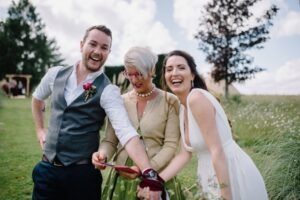
So let’s clear this up once and for all: what IS a celebrant?
Because if you’ve ever been to a wedding, funeral, or vow renewal and thought, “Blimey, that was personal and lovely — who was that person?” — chances are, you’ve already seen a celebrant in action.
So… What Exactly Does a Celebrant Do?
In short:
✅ Celebrants create and deliver ceremonies.
✅ Ceremonies that are personal, unique, and all about the people involved.
✅ Ceremonies that make people feel seen, heard, and celebrated.
 We’re talking:
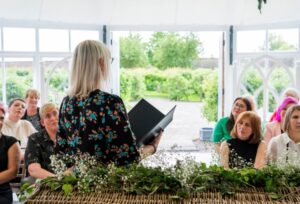
- Weddings that tell a couple’s real story (including the cringy bits that make everyone roar with laughter).
- Funerals that honour who someone truly was, not just a list of dates and jobs
- Vow renewals, memorials, and other life events done in a way that feels real and meaningful
Wedding & Funeral Celebrants write, organise, guide, hold space, and tell stories.
It’s storytelling meets performance meets people skills. And for many of us, it’s the perfect blend.
Are Celebrants the Same as Registrars or Vicars?
Short answer: Nope.
Registrars:
- Are employed by the local council
- Perform legal weddings and civil ceremonies
- Follow set scripts, with very limited flexibility
- Usually work in licensed venues or register offices
Vicars, priests or religious officiants:
- Lead religious services and rituals
- Follow traditions and doctrines specific to their faith
- Often tied to places of worship
Celebrants:
- Work independently and write bespoke ceremonies from scratch
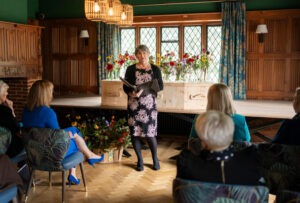
- Include personal stories, humour, rituals, readings — whatever fits the people involved
- Are not bound by legal or religious constraints (though we absolutely respect both!)
- Can work anywhere — beaches, barns, forests, living rooms, football grounds…
Celebrants bring freedom. And that’s what makes this work so powerful.
So Can Celebrants Marry People Legally?
A question we get ALL the time.
In England and Wales:
- Celebrants can’t legally marry you.
- The legal marriage has to happen with a registrar (usually a quick office appointment).
- Then couples have a celebrant-led wedding ceremony wherever, however, and whenever they want.
In Scotland and Northern Ireland, the rules are different — celebrants can be authorised to do legal marriages. (Lucky them.)
What Makes a Good Celebrant?
It’s not just about having a nice voice. A good celebrant is: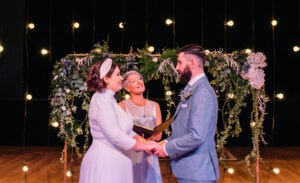
- A brilliant listener
- A natural storyteller
- Calm under pressure (like when the mic cuts out mid-ceremony)
- Comfortable holding space for big emotions — laughter, grief, everything in between
- Organised and professional (because yes, this is a business too)
At Match and Dispatch, our wedding celebrant training and funeral celebrant training is all about blending the creative side with real-life skills — so you’re ready for the magical moments and the occasional curveballs.
Kate T and Kate D have delivered ceremonies in:
- Back gardens, barns, beaches
- Seedy bars (long story)
- Natural burial grounds under rain clouds and rainbows
Because a great celebrant goes wherever the story needs to be told.
Could You Be a Celebrant?
If you’ve ever thought:
- “I’d love to do a job where I work with people and make a difference.”
- “I’m good with words and stories.”
- “I want work that’s flexible, meaningful and feels like me.”
… then this might be your calling.
Want to Know More?
We’d love to chat. No hard sell — just honest info.
👉 Join our mailing list for insights into real celebrant life
👉 Come to a Monday Meet Up and ask us anything about funeral celebrant training, wedding celebrant courses, or how to become a celebrant in the UK
Celebrancy might just be the perfect mix of heart, creativity, and career.
Viva,
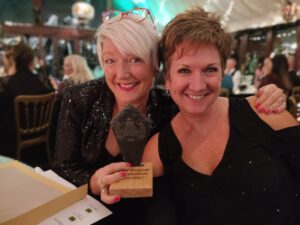
Kate and Kate x


