
(It’s not about the playlist. Although that does help.)
You’ve probably been to one.
A funeral that felt… flat. Like someone just ticked off the boxes, read a generic script, and wrapped it up in 20 minutes. You left thinking, Was that it?
Now contrast that with a funeral where the person came alive in the telling.
Where the room laughed and cried. Where people said, “That was so them.”
That’s the difference a personal funeral makes.
And it’s a difference that celebrants are trained to deliver.
A Personal Funeral Doesn’t Mean “Big and Fancy”
It doesn’t mean seven eulogies and a doves-on-command release.
It doesn’t mean an expensive venue or a slideshow set to Coldplay.
It doesn’t mean theatrical.
 It means:
- The person’s life is honestly reflected
- Their quirks, values and voice are in the room
- The people mourning them feel seen, too
- It’s about them, not a version of them that fits someone else’s template
It’s about truth, told with care.
Why Does This Matter?
Because funerals do something sacred — whether or not religion is involved.
They help people:
- Begin to process loss
- Acknowledge reality
- Celebrate what mattered
- Say goodbye, in whatever way they need to
When the ceremony fits, it can shift something. It gives people a place to land.
When it doesn’t, it can leave people unsettled, frustrated, or with an extra layer of grief: That wasn’t them at all.
This Is Where Celebrants Come In
 Celebrants don’t read from a standard script.
They meet with the family or loved ones, listen deeply, ask questions, and then craft something bespoke — even if there’s only a day or two to do it.
We’ve seen ceremonies where:
- The family wrote a group poem
- The coffin was decorated with chalk messages
- The music ranged from Frank Sinatra to Fatboy Slim
- Someone cracked a joke halfway through — and it was exactly what everyone needed
A good celebrant holds that space, shapes it with care, and makes sure the person who died isn’t lost in the admin.
And we know — because we’ve done it.
 Kate T and Kate D have led funerals in back gardens, barns, and seedy bars.
They’ve had sing-a-longs and grandchildren playing the piano.
They’ve had candle ceremonies and video montages.
They’ve had colour themes, specific clothing requests, painted coffins, cardboard coffins, and beautiful handmade shrouds. They’ve joined a funeral procession with a New-Orlean’s style jazz band.
If it’s meaningful to the family — if it represents the person who’s died — they’re all in.
Because that’s what a personal funeral should be.
You Can’t Fake It — But You Can Learn It
 If you’re reading this thinking, I’d want someone like that at my funeral — good.
If you’re thinking, I could do that — also good.
Creating personal funerals isn’t about being dramatic.
It’s about being grounded, compassionate, creative — and properly trained.
This is professional work. It’s emotional labour. And it’s one of the most meaningful roles you can step into.
Wondering What It’s Like to Be a Funeral Celebrant?
We get it — it’s a big decision. But if this kind of work speaks to you, don’t ignore it.
👉 Join our mailing list to hear how others made the leap
👉 Come to a Monday Meet Up for the honest lowdown on what the role involves
We’ll talk about:
- What training includes
- What it’s like working with funeral directors and families
- What’s hard, what’s powerful, and what makes it all worth it
You don’t need to have all the answers.
You just need to be open to the question.
Viva.
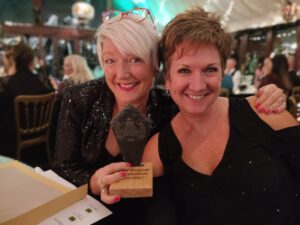
Kate and Kate


