
The wedding law reform consultation has closed.
After years – decades, really – of talking about the fact that wedding law in England and Wales is hopelessly outdated, change finally feels as though it might actually be coming. We’ve read the consultation, submitted our views and now we’re going to sit back and wait as the wheels of government do their thing… ie turn as slowly as a sloth on valium!
So what happens now? What could the new wedding landscape look like? And, if you’re thinking about becoming a wedding celebrant, should you train now – or sit on your hands and wait to see what happens?
We think the answer is very definitely: train now.
Here’s why.
First things first: nothing has changed yet
The consultation that closed on 24 September was exactly that – a consultation.
The Government will now consider the responses and use them to help shape the legislation. We don’t yet know exactly what the final system will look like, when legislation will reach Parliament or when any new rules will come into force.
So anyone telling you they know exactly what celebrants will need to do under the new system is getting ahead of themselves.
What we do know, however, is the direction in which the Government is travelling.
The proposals would fundamentally change the way weddings work in England and Wales, moving away from a system largely based around where a wedding takes place and towards one based around who officiates it.
And, crucially for our industry, the Government has proposed allowing independent officiants to conduct legally binding weddings.
That is a very big deal.
From an optional extra to the person who actually marries you
At the moment, independent wedding celebrants in England and Wales can create and conduct wonderful, completely personal wedding ceremonies – but we can’t complete the legal marriage.
That means our couples also need to do the legal bit separately.
For some, that’s no problem at all. They nip to the register office with a couple of witnesses, say the words, sign the thing and save the meaningful ceremony for their celebrant.
But there are undoubtedly couples who would choose an independent celebrant if that celebrant could do everything.
One person. One ceremony. One wedding. We have couples say it to us and, yes, it does make us very sad.
Under the proposals in the consultation, that could all change. We’d no longer be splitting the legal bit from the ceremonial bit and the potential impact on our profession is huge.
The Government’s consultation cites estimates that around 1,000 independent celebrants currently conduct approximately 10,000 non-legally binding wedding ceremonies each year.
If independent officiants are permitted to conduct legal weddings, the Law Commission estimated they could conduct around 50,000 weddings a year.
Yes. Fifty thousand.
That’s potentially five times the current number.
So will becoming a celebrant get harder?
Possibly – although we’d probably use the word more professionalised rather than harder.
If independent celebrants are going to take legal responsibility for marrying people, it is entirely reasonable that there will need to be standards attached to that responsibility. There is going to have to be some sort of standardisation / regulation.
The consultation looked at issues including training, monitoring, accountability and the legal duties of officiants.
We don’t yet know exactly what those requirements will be.
What seems very likely, though, is that there will be some upskilling across the profession. Existing celebrants may need to learn new processes and demonstrate that they understand their legal responsibilities. Training providers will need to adapt. There may be additional requirements before somebody can become legally authorised to officiate.
And we’re not remotely frightened by that.
Quite the opposite.
We’ve always believed celebrancy should be treated as a proper profession.
Being able to stand at the front of a room and speak confidently does not automatically make someone a good celebrant. There is craft involved in interviewing couples, finding their story, writing brilliantly, creating a ceremony, managing a room, handling the unexpected and understanding the enormous responsibility that comes with being at the centre of one of the biggest days of somebody’s life.
Add legal responsibility to that list and, yes, celebrants will need to know their stuff.
But look at the potential payoff.
A little more responsibility and some additional learning in return for access to a potentially vastly bigger market?
We’ll take that.
Should I wait until wedding law reform is finalised before I train?
We wouldn’t.
And not simply because we’re celebrant trainers who would quite like you to train with us.
There is a practical reason.
Whatever the final regulatory framework looks like, learning how to be a good wedding celebrant isn’t going to become redundant.
You will still need to know how to meet couples. 
You will still need to know what questions to ask them.
You will still need to understand ceremony structure.
You will still need to be able to write.
You will still need to be able to stand in front of 100 people when the photographer is in the wrong place, a toddler is licking the aisle decoration and the best man has temporarily disappeared – and make everything feel completely under control.
Wedding law reform won’t teach you any of that.
Those are the skills of celebrancy.
The legal and regulatory elements can be added when we know exactly what they are.
In fact, getting established now could put you in a stronger position
If reform does open up legal weddings to independent celebrants, there isn’t going to be a magic starting gun followed by thousands of fully formed, experienced celebrants suddenly appearing the following morning.
Couples will still want people they trust.
Venues will still want to recommend celebrants they know are good.
Photographers, planners and other wedding suppliers will still build relationships with people they’ve worked alongside.
Google will still favour established websites over one you put up last Thursday.
Your reputation, network, experience, website, social media presence and body of work all take time to build.
Training now gives you time to do exactly that.
You can learn the job, start conducting ceremonies under the current system, develop your writing, build relationships with venues and suppliers, get photographs and testimonials and establish yourself as a professional celebrant.
Then, when the law changes, you’re not standing on the starting line.
You’ve already been running.
What happens next with wedding law reform?
Now that the consultation has closed, the Government will consider the responses and use them to inform the development of legislation.
There are still questions to answer and details to thrash out.
We don’t know precisely what the final requirements for independent officiants will be, and legislation will still need to go through the parliamentary process.
So we’re not pretending this is all happening next Tuesday.
But the important point is that the Government has already committed to reforming wedding law when parliamentary time allows. Its consultation didn’t simply ask whether the existing system was a bit rubbish. It set out proposals for how a new officiant-based system could actually work.
And its stated initial position is that independent officiants should be allowed to conduct legally binding weddings.
For independent celebrancy, that feels significant.
A bigger opportunity – but also a better profession
There is another reason we’re excited about reform.
If celebrants are ultimately entrusted with the legal responsibility of marrying people, the profession itself changes.
Couples understand more clearly what we do.
Venues understand our role.
Celebrancy becomes less of an ‘alternative’ to the traditional wedding system and more firmly part of the wedding mainstream.
And good training, ongoing learning and professional standards become even more important.
Frankly, we’re here for all of that.
Couples increasingly want choice. They want ceremonies that actually sound like them. They want flexibility over where, when and how they marry.
Wedding law reform has the potential to give them that.
And it has the potential to create a huge opportunity for the next generation of properly trained, brilliant independent wedding celebrants.
So, if you’ve been thinking about becoming one, we wouldn’t wait for the legislation to land.
Learn the craft now. Build the business now. Get some experience under your belt now.
Then, whatever the final details of wedding law reform look like, you’ll be ready for them.
And if the market really does grow from around 10,000 independent celebrant-led weddings a year towards 50,000?
Well.
Won’t that be a shot in the arm!
Check out our Wedding Celebrant Training HERE
Need a chat before you commit – that’s what our Free Discover Meet-Ups are for – book on here!
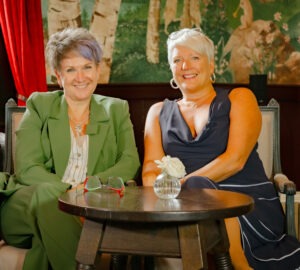
Kate & Kate


