
If you’re looking for a wedding celebrant training course, here’s something we’d suggest before you choose one: find out who wrote it.
Because there’s a world of difference between knowing what a wedding celebrant should do and having actually stood at the front of hundreds and hundreds of weddings and done it.
We’ve worked in weddings for more than 20 years. We spent over a decade working in the registration service, marrying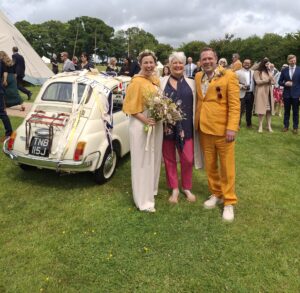 couples day in, day out, before leaving to become independent celebrants. Since then, we’ve conducted weddings in fields, barns, hotels, gardens, woodland, people’s homes and all sorts of places that would have made our former registrar selves raise an eyebrow.
Along the way we’ve dealt with nervous couples, nervous parents, missing rings, missing guests, missing groomsmen, uncooperative weather, complicated families, overenthusiastic dogs, reluctant toddlers and the occasional best man who has enjoyed the pre-ceremony refreshments rather more than was strictly advisable.
So, when we created the Match & Dispatch wedding celebrant course, we basically emptied our heads into it. Everything we know about weddings, everything we know about ceremonies and, importantly, everything we know about actually making a living from them.
A wedding celebrant course should teach you more than ceremony structure
Obviously, you need to understand how a wedding ceremony works, so our wedding celebrant course covers all the nuts and bolts – meeting your couple, gathering information, structuring the ceremony, writing their story, vows, readings, music, symbolic elements, involving family and friends and actually delivering the thing on the day.
 But knowing the order in which things happen doesn’t make you a good wedding celebrant. The really interesting bit is everything that sits around it.
How do you get a couple to relax enough to tell you the good stuff rather than simply giving you the edited highlights of their relationship? What questions produce stories rather than one-word answers? How do you find the funny bits without turning their wedding into a stand-up routine? How do you write something romantic without making everyone feel slightly queasy?
And, perhaps most importantly, how do you create a ceremony that feels completely like them, rather than Wedding Ceremony Number 47 with the names changed?
That’s the craft of celebrancy, and that’s a huge part of our wedding celebrant training course.
We’ve seen weddings from both sides
Our background in the registration service has given us a slightly unusual perspective as celebrant trainers.
For more than ten years we worked as registrars, so we understand the legal side of marriage, how wedding venues operate, what happens behind the scenes and how ceremonies work when you’re operating within a highly regulated system.
Then we crossed over to independent celebrancy and discovered just how much more freedom there could be. Suddenly, instead of starting with the restrictions of the ceremony and fitting the couple into them, we could start with the couple themselves and ask, ‘What do you actually want your wedding ceremony to be?’
That experience on both sides has shaped our wedding celebrant course enormously. We don’t teach celebrancy as a theoretical exercise. We teach it as people who have spent a very large chunk of their working lives actually marrying people and who are still out there doing it now.
And then there’s the writing
We bang on about writing a lot. There’s a reason.
A brilliant wedding celebrant needs to be able to write, but we’re not talking about flowery writing or clever writing – the kind that makes everyone think, ‘Gosh, what a wonderful writer that celebrant is.’
The goal is for the people listening to think, ‘That’s SO them.’
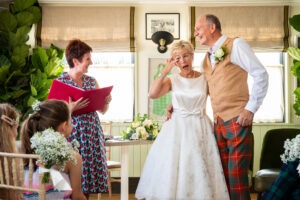 Writing a couple’s story is about finding their voice, their humour, their relationship and all those tiny details that make them recognisable. It has to sound natural when spoken aloud, make people laugh in the right places, move them in others and never feel as though you simply pulled a template out of a drawer and filled in the blanks.
Our wedding celebrant course gives you the opportunity to practise that writing and, importantly, to receive detailed feedback on it.
We don’t just say ‘lovely script, well done’ and send you on your way. We look properly at what you’ve written – what works, what doesn’t, where you’ve overwritten, where you’ve missed an opportunity, where the pace drops, where something won’t sound natural when spoken aloud and where you’ve got it absolutely spot on.
Because writing gets better by writing, rewriting and getting good editorial feedback.
But how are you going to get any weddings?
This is the bit that gets forgotten surprisingly often in wedding celebrant training.
You can be the best celebrant in Britain. You can write like Nora Ephron and conduct a ceremony with the confidence of someone who’s been doing it since birth. But if nobody knows you exist, you’re going to have a very quiet diary.
Being a wedding celebrant means being self-employed, so our wedding celebrant course doesn’t stop when we’ve taught you how to conduct a wedding. We also talk about how you actually start building a business, because that’s the other half of the job.
 Take wedding fayres. Standing behind a table on a Sunday morning while someone three stands down attempts to tempt couples with tiny pieces of cake might not sound like the most glamorous part of your new career, but wedding fayres put you in a room full of exactly the people you’re trying to reach.
Done properly, they’re a brilliant way for a new celebrant to meet couples, get comfortable talking about what they do and start becoming known within the local wedding industry. So we teach you how to choose the right ones, how to present yourself, what to put on your stand, how to start conversations without pouncing on couples like an overexcited spaniel and what to do after the wedding fayre is over.
These are the things that turn ‘I’ve trained as a celebrant’ into ‘I’m actually getting bookings’.
Befriend your local wedding venues
Wedding venues can be one of the best sources of referrals for a celebrant, but simply emailing 50 venues saying, ‘Hello, I’m a celebrant, please recommend me’ probably isn’t going to get you very far.
Relationships matter.
Go to venue open days, introduce yourself, follow them on social media, share their content and get to know the wedding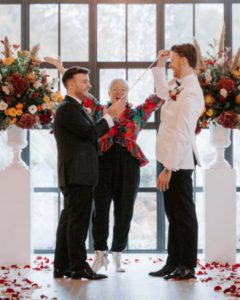 coordinators. When you do conduct a wedding at a venue, be the sort of supplier they would really like to have back. Turn up on time, know what’s happening, be friendly to the staff, work with the photographer and other suppliers rather than treating them as the enemy and, basically, don’t be a diva.
It sounds simple, but this is how reputations are built.
That’s why our wedding celebrant course covers the realities of getting yourself out there. We’d rather you didn’t finish your training with a lovely certificate and absolutely no idea what to do next.
You’re joining an industry
Yes, you’ll need a website. Yes, social media matters. And yes, Google matters – hence us writing a blog with the words wedding celebrant course in it quite a lot.
But the wedding industry is also incredibly relationship-driven. Photographers know venues, venues know planners, planners know florists and everyone seems to know a cake maker.
One of the things we want students to understand during their wedding celebrant training is that you’re not building a business in isolation. You’re joining an industry, and becoming part of that industry is one of the most effective ways of building a sustainable business.
Make friends in it.
What should you look for in a wedding celebrant course?
Obviously we’d love you to choose ours, but we’re also quite keen on people making informed decisions.
So, if you’re comparing wedding celebrant courses, look beyond the headline and find out who is actually teaching you and what their experience is. Are they still practising as celebrants? Does the course teach you how to interview couples rather than simply handing you a questionnaire? Does it teach you to write rather than giving you templates? Will somebody actually read your work and give you meaningful feedback?
And then look at what happens beyond the ceremony itself. Is there ongoing support? Does the training teach you anything about wedding fayres, venues, networking, marketing and actually finding clients?
Because completing a wedding celebrant course is only the beginning. The goal is to actually become a working wedding celebrant.
More than 20 years of weddings, without you having to do the 20 years
That’s really what we wanted to create when we built the Match & Dispatch wedding celebrant course.
We wanted to take everything we’ve learned from more than two decades in weddings – the registrar years, the independent celebrant years, the brilliant weddings, the tricky weddings, the things that worked, the things that spectacularly didn’t, the writing, the couples, the venues and the business lessons – and hand it over.
You don’t need to make every mistake we’ve made because we’ve already done some of those for you. And you don’t need to spend ten years working as a registrar either. We’ve done that bit too.
What you do need is good training, lots of practice, honest feedback and an understanding that becoming a successful wedding celebrant is about much more than standing at the front on the day.
It’s about learning the craft and building the business.
That’s what we’ve crammed into our wedding celebrant course.
Have a look at the Match & Dispatch Wedding Celebrant Course HERE.
Or come along to one of our free Discovery Meet-ups, meet us and ask us whatever you want to know before deciding whether we’re your people.
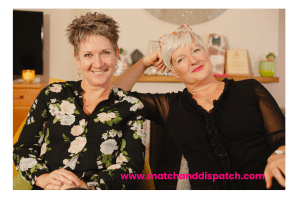
Kate & Kate


