
When you’re a celebrant, there are some ceremonies that stay with you forever — and none more so than those for babies and children. They’re the ones that remind you why words matter, why presence matters, and why compassion can sometimes be the most powerful thing you bring to a room.
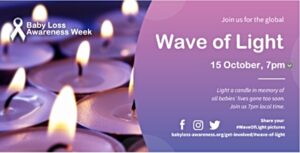
This week is Baby Loss Awareness Week (9th–15th October), ending with the Wave of Light on the 15th — when families all over the world light candles to remember the babies they’ve lost. It’s a moment of shared love and remembrance, and one that celebrants can help to hold gently and meaningfully.
Baby Loss Awareness Week: Supporting Families Through the Unthinkable
(A guide for celebrants)
When you’re a celebrant, there are some ceremonies that stay with you forever — and none more so than those for babies and children. They’re the ones that remind you why words matter, why presence matters, and why compassion can sometimes be the most powerful thing you bring to a room.
This week is Baby Loss Awareness Week (7th–13th October), ending with the Wave of Light on the 15th — when families all over the world light candles to remember the babies they’ve lost. It’s a moment of shared love and remembrance, and one that celebrants can help to hold gently and meaningfully.
Understanding the Unseen Loss
Every October, thousands of candles are lit across the UK for Baby Loss Awareness Week, culminating in the Wave of Light on 15th October — a moment to remember babies who’ve died and to stand alongside the families who live every day with that loss.
It’s not an easy subject to talk about. In fact, it’s one of the hardest.
But that’s exactly why it matters that we do talk about it — and why celebrants have such an important role to play.
Baby loss is unlike any other bereavement. When someone dies in adulthood, you grieve the person you knew.
When a baby dies — whether during pregnancy, at birth or in early childhood — you also grieve the future you imagined.
You mourn not only your baby, but the birthdays that won’t be celebrated, the milestones that will never come, and the person they might have become.
It’s an invisible heartbreak, often complicated by silence or misunderstanding. As celebrants, we can help to make space for that love and grief to coexist.
The Celebrant’s Role
When a baby or child dies, families are often overwhelmed and exhausted — physically, emotionally, and mentally.
They may have had no experience of arranging a funeral before, and they may not even know what choices exist.
Your role as a celebrant isn’t to fix their pain — it’s to hold space, listen deeply, and create something meaningful that honours both the love and the loss.
Here’s how you can help.
1. Start with Listening, Not Logistics
Families in shock can struggle to make decisions. Begin by asking gentle, open questions:
- “Tell me about your baby.”
- “What name did you choose?”
- “Are there any moments or memories that feel special to include?”
Sometimes, that’s all they need at first — to be seen as parents, and their baby as real, loved, and important.
2. Create Rituals That Honour Their Baby
Ritual can be powerful after baby loss, but it doesn’t have to be grand or complicated.
Lighting candles, reading letters, planting a tree, or playing a song they listened to in hospital — all these acts can carry enormous meaning. It could be as simple as reading a children’s storybook if it particularly resonates.
Many families choose to include a naming moment as part of the ceremony, even if the baby never took a breath. It can be deeply healing to speak that name aloud, to give it space in the world.
3. Offer Flexibility in Format
Some families want a full service with friends and relatives present.
Others need something quieter — perhaps a small gathering at home, or even a moment by themselves.
Remind them that there is no ‘right’ way to do this.
They can hold a funeral, a memorial, a scattering, or a private candle-lighting at a later time. Grief unfolds at its own pace.
4. Be Practical About the Details
While you’re not responsible for the legal or logistical parts (that’s the funeral director’s role), it helps to know the basics so you can guide families confidently:
- The Children’s Funeral Fund for England covers burial or cremation fees for any child under 18 (including stillbirth after 24 weeks).
- For babies who died before 24 weeks, there’s usually no legal requirement to register the death — but a simple service can still be arranged.
- Charities like the Child Funeral Charity or React may help with funeral costs.
Just having someone calmly explain what’s possible can make an enormous difference.
5. Encourage Keepsakes and Connection
Some parents find comfort in adding special items to a coffin — a blanket, a teddy, a photo.
Others want to write letters, take handprints, or create a small memory box.
As celebrants, we can gently normalise these choices, reassuring families that it’s okay to want closeness, to visit, to hold, or simply to say goodbye in their own way.
6. Include the Wider Family
Siblings, grandparents, and close friends often feel lost in the background of baby loss.
You might suggest ways to include them — siblings reading a poem, lighting candles, or adding a flower or ribbon during the service.
These small gestures help everyone feel part of the goodbye and part of the ongoing remembrance. Both the Kates have read out letters from sisters and brothers, nannies, grandads and aunties and uncles. If siblings are going to be present, think about how you can make the ceremony child-friendly and how they can be included in a meaningful and comforting way.
7. Remember the Ongoing Journey
Grief doesn’t end with the funeral. Many families find Baby Loss Awareness Week — and especially the Wave of Light — an annual opportunity to reconnect with their child’s memory.
At 7pm on 15th October, people across the world light candles for one hour, creating a literal and symbolic wave of light.
You might suggest this to families as a yearly act of remembrance — a quiet moment to honour their baby’s life, however short.
8. Signpost to Support
You’re not a counsellor, but you can be a bridge to support.
Here are some trusted UK resources:
- Sands (Stillbirth and Neonatal Death Charity) – sands.org.uk
- Tommy’s – tommys.org
- The Lullaby Trust (support after sudden infant death) – lullabytrust.org.uk
- Aching Arms – provides comfort bears to bereaved parents – achingarms.co.uk
Keep a simple handout or digital resource list you can share with families — they may not absorb it straight away, but it’ll be there when they’re ready.
Holding Hope and Heart
As celebrants, we’re privileged to walk beside families in the darkest moments imaginable.
Our words, presence, and gentleness matter — not because they take away the pain, but because they say:
Your baby mattered. Your love matters. You are not alone.
So this Baby Loss Awareness Week, light a candle, join the Wave of Light and remember the families who live with love and loss intertwined.
If you ever find yourself unsure of what to say or do, start with this:
“Tell me about them.”
That’s where healing begins.
💜 From Kate & Kate
If you’re a celebrant — or training to become one — and you want to feel more confident supporting families through baby loss and other forms of grief, we cover this with honesty, care and sensitivity on the Match & Dispatch celebrant training course.
Because being a celebrant isn’t just about ceremonies. It’s about walking with people through every kind of love — even the kind that breaks your heart.
Light a candle. Hold space. Keep talking.
Kate & Kate x


