
A Funeral in a Field: Why More Families Are Choosing Natural Burial Grounds
(Because not everyone digs convention — see what we did there?!)
Once upon a time, funerals followed a script.
Same time slot. Same tone. Same air of sombre reverence with The Lord’s Prayer for good measure and a Hammond organ playlist.
But things are changing.
More families are saying, “Hang on — does it have to be this way? Bob/Sue/Dan just wasn’t like that.”
And the answer is: absolutely not.
Welcome to the rise of the natural burial ground.
No gloomy chapels. No conveyor-belt service.
Just fresh air, open skies, and a funeral that actually feels like the person it’s for.
What Is a Natural Burial Ground?
Think fields, woods, wildflowers, birdsong.
No polished gravestones. No plastic flowers.
Usually the grave isn’t marked at all — you’ll just have a map and tree to find for your person and, if you’re a nature-loving eco-warrior, what could be better?
Just people laid to rest in biodegradable coffins or handmade shrouds, surrounded by nature and remembered in a way that’s calm, kind, and completely personal.
Some are part of working farms.
Some are tucked in woodlands.
Some are so peaceful you forget you’re at a funeral at all — until you hear someone say, “That was… beautiful.”
Deb Reed one of our Celebrants conducted this funeral ceremony and scatering of ashes at a family farm in Essex


Why People Are Choosing Them
✅ More time — You’re not rushed out the door in 20 minutes because the next slot’s waiting
✅ More freedom — You can shape the ceremony to suit your person
✅ More connection — It feels grounded, real, rooted
✅ More eco-friendly — No concrete, no metal, no fuss
 Sometimes conventional cemeteries have a natural space, too – Kate T’s already got her eye on this dingly dell at the back of Hasting cemetery. 🙂
Often you’re given a whole-day slot, so you can:
- Have a picnic afterwards
- Sing during the service
- Tell stories round a firepit
- Play games (yes, really)
- Walk the dog up to the grave next week and say, “Hiya.”
And best of all?
You can choose a celebrant who’ll help you create something human, honest and heartfelt.
What It Means to Be a Celebrant in These Spaces
This is where celebrants shine.
They’re not tied to timing or scripts.
They’re not limited to religious or civil wording.
They’re there to craft a ceremony that fits the location, the people, the moment — and the person who’s died.
At Match and Dispatch, our funeral celebrant training means learning how to hold space anywhere.
Back gardens, barns, and yes — beautiful burial grounds.
Kate T and Kate D have led funerals with:
- Painted cardboard coffins
- Shrouds made with love
- Candle ceremonies at sunset
- Grandchildren playing piano
- Dress codes, singalongs and even video montages
If it’s meaningful to the family and represents the person who’s died — they’re all in.
Could You See Yourself Doing This Work?
Being a funeral celebrant isn’t about following rules.
It’s about showing up with compassion, listening carefully, and telling someone’s story with heart.
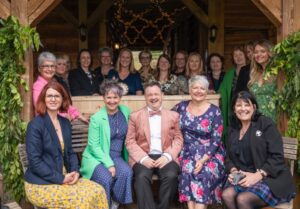
If you’ve ever sat at a funeral and thought, this could be better — maybe you’re the one to do it.
We won’t pretend it’s easy. But we will say it’s worth it.
And we can show you how to begin.
👉 Join our mailing list to hear what training is really like
👉 Come to a Monday Webinar to see if this path is for you
Funerals are changing.
Maybe you’re meant to be part of that.
Viva,
Kate and Kate x


